
Cosmic Collisions
2006 | Movie of American Museum of Natural History | English

23 mins
Licensing
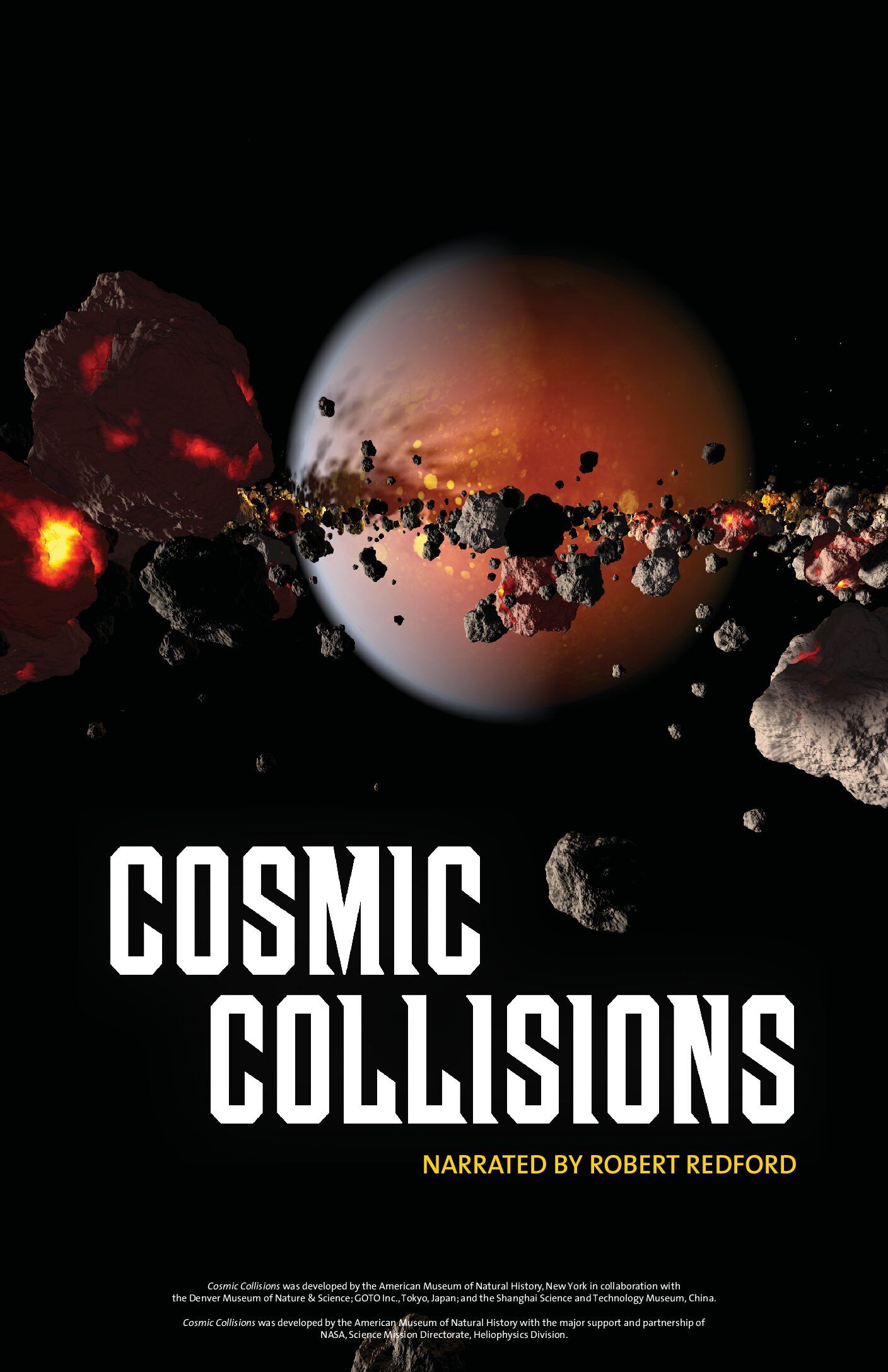
A dramatic re-creation of the meteorite impact that hastened the end of the Age of Dinosaurs 65 million years ago.
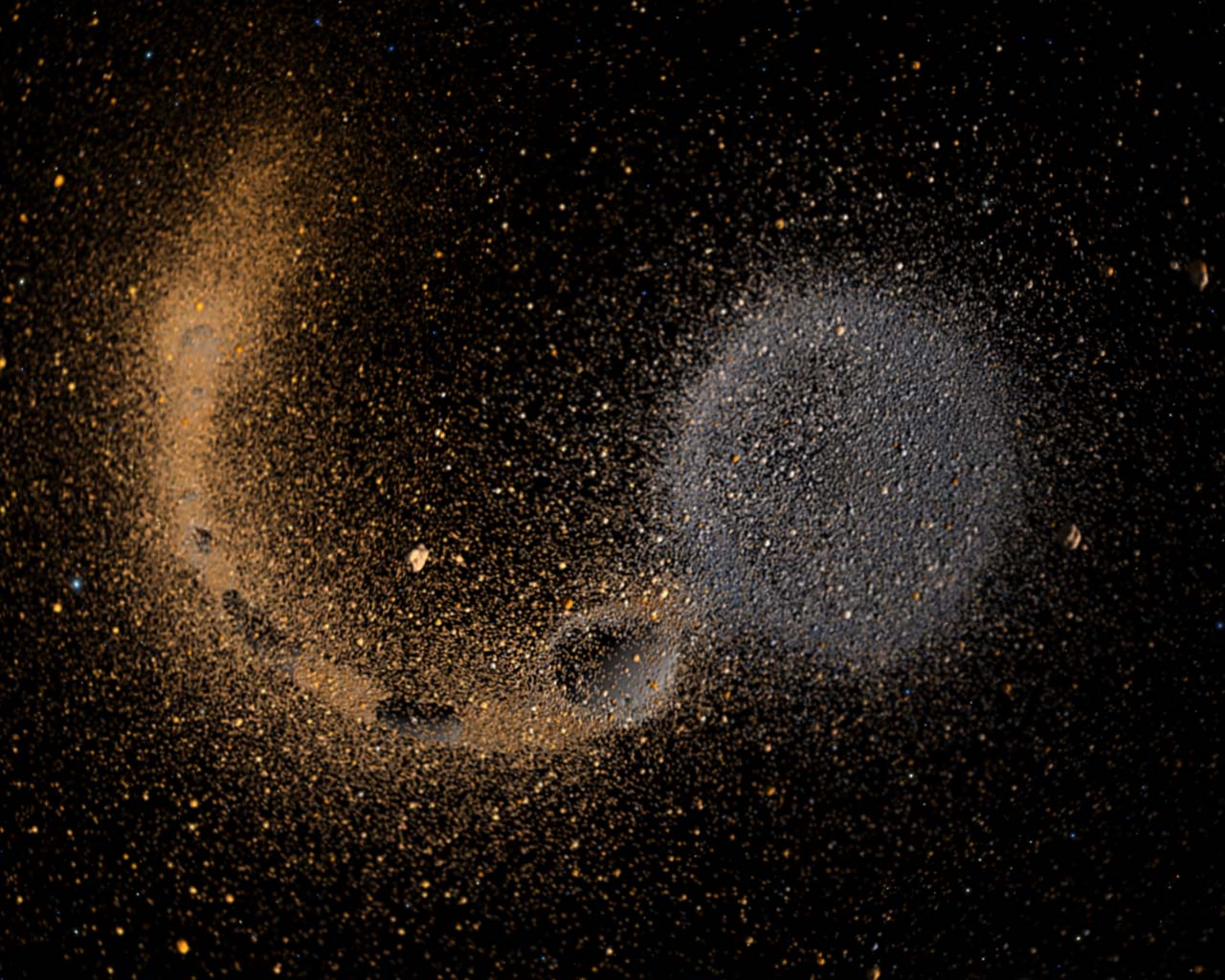
Cosmic Collisions presents a view of the cosmos that is radically different from our everyday experience watching the peaceful night sky. Collisions are commonplace occurrences in space and are currently understood by scientists as a key mechanism in the evolution of the universe. They are the spectacular and inevitable result of gravity pulling together objects such as planets, stars, and galaxies, which are in constant motion through space. Cosmic Collisions re-creates tremendous encounters that are usually invisible to us, either because they unfold over incredibly vast expanses of time and space, spanning billions of years and trillions of miles (as in the clash of galaxies), or because they occur almost instantaneously on a subatomic scale (as in the collision of protons in the heart of the Sun).
Cosmic Collisions reveals the explosive encounters that shaped our solar system, changed the course of life on Earth, and continue to transform our galaxy and universe.
CREDITS
⎯⎯⎯⎯⎯⎯⎯⎯⎯⎯⎯⎯⎯⎯⎯⎯⎯⎯⎯⎯⎯⎯⎯
Cosmic Collisions was developed by the American Museum of Natural History, New York, in collaboration with the Denver Museum of Nature & Science; GOTO, Inc., Tokyo, Japan; and the Shanghai Science and Technology Museum, China.

Cosmic Collisions was created by the American Museum of Natural History with the major support and partnership of the Heliophysics Division of NASA’s Science Mission Directorate.

Cosmic Collisions was written by Stephanie Abrams, award-winning writer and director of documentaries for PBS and USA Networks, and Emmy award winner Louise A. Gikow, with music by renowned Brazilian pianist and composer Marcelo Zarvos and award-winning composer Robert Miller.

About the American Museum of Natural History (amnh.org)

The American Museum of Natural History, founded in 1869, is one of the world’s preeminent scientific, educational, and cultural institutions. The Museum encompasses more than 40 permanent exhibition halls, including the Allison and Roberto Mignone Halls of Gems and Minerals, which opened in 2021 – those in the Rose Center for Earth and Space and the Hayden Planetarium, as well as galleries for temporary exhibitions. The Museum’s scientists draw on a world-class research collection of more than 34 million artifacts and specimens, some of which are billions of years old, and on one of the largest natural history libraries in the world. Through its Richard Gilder Graduate School, the Museum grants the Ph.D. degree in Comparative Biology and the Master of Arts in Teaching (MAT) degree, the only such free-standing, degree-granting programs at any museum in the United States. The Museum’s website, digital videos, and apps for mobile devices bring its collections, exhibitions, and educational programs to millions more around the world. Visit amnh.org for more information.